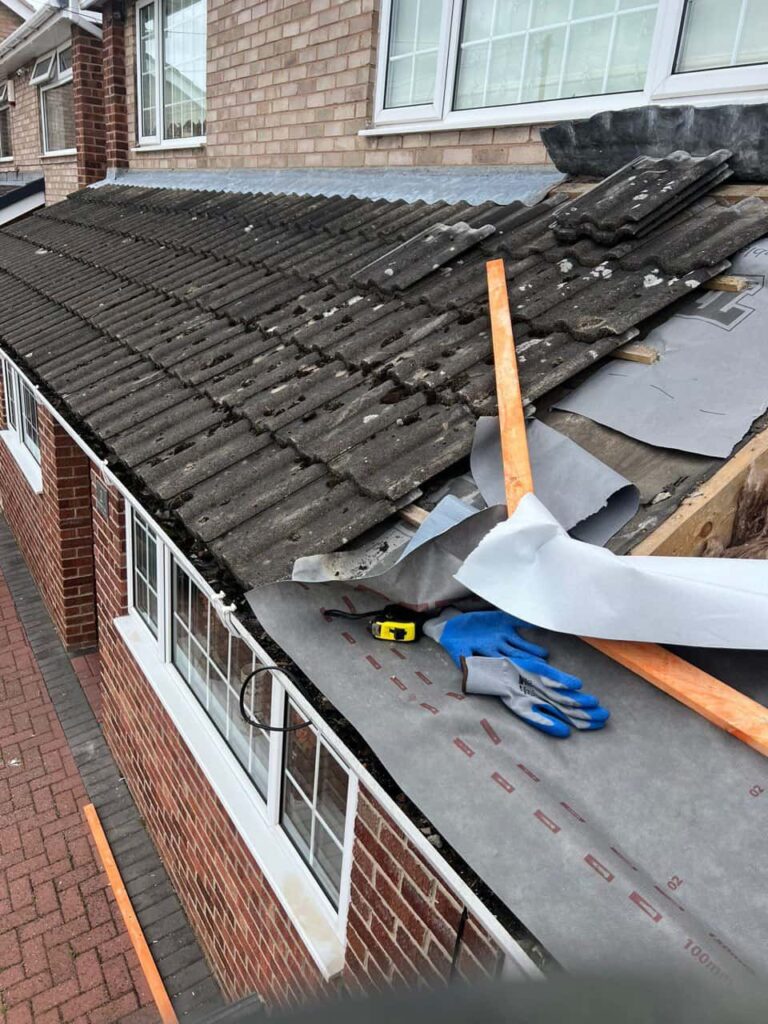
A slipped or missing roof tile may appear to be a small defect, particularly when there is no visible leak inside the property. However, tiles form part of an overlapping system designed to direct rainwater safely down the roof. When one moves out of position, the layers beneath it can become exposed to rain, wind and debris.
Property owners in Ruddington, Nottingham, should arrange for the affected area to be inspected promptly. Early assessment can often keep the work focused on the immediate defect while helping to prevent moisture from reaching the roof structure or internal finishes.
Steps to Take When a Roof Tile Has Moved or Fallen
The extent of the problem cannot always be judged from ground level. A sensible response involves protecting the area below, checking for signs of water ingress and arranging a professional roof inspection.
Keep Clear of the Area Below
If a tile or fragments of roofing material have fallen, keep people and vehicles away from the surrounding area. Nearby tiles may also have been loosened by the same movement, even if they still appear to be in place.
Do not attempt to climb onto the roof. Roof coverings can be slippery, while a damaged section may not provide secure footing. A professional roofer can access and inspect the area using suitable equipment.
Check Inside for Signs of Water Entry
A missing tile does not always cause an immediate or obvious leak. Roofing underlay may temporarily redirect some water, but it is not intended to replace the protection provided by the tiles.
From inside the property, look for:
- Damp marks on ceilings or walls
- Discoloured patches near the roofline
- Moisture on roof timbers
- Wet or compressed insulation
- Daylight entering through the roof covering
- Musty smells in the loft
- Drips during or shortly after rainfall
The absence of these signs does not confirm that the roof is watertight. Water may be entering in small quantities or travelling along the underlay before becoming visible elsewhere.
Note Where the Tile Came From
If it can be done safely from ground level, note the approximate position of the gap. Tiles close to ridges, valleys, verges, chimneys and roof junctions can leave particularly important weatherproofing details exposed.
It is also helpful to record when the damage was first noticed and whether it followed strong wind or heavy rain. Photographs taken from a safe position may assist the initial assessment, but they should not replace a close inspection.
Arrange an Inspection Without Waiting for a Leak
Waiting for internal dampness can allow a manageable defect to develop into a broader roofing problem. Once water passes beneath the covering, it may affect battens, underlay, insulation, timbers and decorative surfaces.
A professional inspection can establish:
- Whether the tile has slipped or broken
- Whether its fixing has failed
- If neighbouring tiles are loose or cracked
- Whether the underlay and battens remain sound
- If water has entered beneath the covering
- Whether the defect is isolated or part of wider deterioration
This allows the repair to address the underlying cause rather than simply covering the visible gap.
Understand Why the Tile Moved
Roof tiles can slip for several reasons. Strong winds may lift a poorly secured tile, while ageing fixings can corrode or weaken. Timber battens may also deteriorate, and accidental impact can crack the tile around its fixing point.
A replacement tile will only provide a reliable result if it is secured to a sound supporting structure. If the batten, fixing or surrounding tiles are defective, these areas should be repaired at the same time.
Check the Surrounding Roof Covering
A single displaced tile may be the first visible sign of more widespread wear. Tiles installed at the same time are often exposed to similar conditions, so nearby components may also be approaching failure.
The surrounding area should be checked for cracked tiles, widened gaps, loose ridge details, damaged flashing and uneven courses. This broader assessment helps reduce the likelihood of another tile slipping shortly afterwards.
What If the Roof Is Not Leaking?
A roof can remain apparently dry after a tile slips, especially during calm or light rainfall. The direction of the wind, position of the opening and condition of the underlay all influence whether water enters.
Conditions can change during the next period of wind-driven rain. A defect that causes no immediate symptoms may then allow moisture beneath the covering. Having the tile checked before this happens is more dependable than using the absence of a leak as evidence that no repair is needed.
What Does a Professional Repair Involve?
The appropriate repair depends on what caused the tile to move. Work may involve replacing a broken tile, refitting a sound tile, renewing failed fixings or repairing the supporting batten. Any nearby damage should also be corrected so that the repaired section integrates properly with the existing roof covering.
The objective is to restore the overlapping tile arrangement and prevent water from reaching the layers below. A competent repair should address both the displaced tile and the condition that allowed it to move.
Conclusion
When you notice a slipped or missing roof tile, keep clear of the area below, check the property for signs of water ingress and arrange a professional inspection promptly. Even without an active leak, the exposed section remains vulnerable to changing weather conditions.
Ruddington Roofing Repairs provides professional roof inspections and tile repairs in Ruddington, Nottingham. If you have noticed a displaced, damaged or missing tile, contact our team to arrange an assessment and determine the correct repair for your roof.
Call us on: 0115 647 1193
Click here to find out more about Ruddington Roofing Repairs
Click here to complete our contact form and see how we can help with your roofing needs.